Best Weatherproofing Home Improvements for Fall
A small water stain on a ceiling or a draft around the back door can turn into a much larger repair if it is ignored through another season of rain and humidity. The best weatherproofing home improvements focus on stopping water, air, and moisture where they enter your home - before they damage framing, insulation, flooring, or finishes.
For homeowners in Tallahassee, Marianna, Dothan, and nearby communities, weatherproofing is not only a cold-weather task. Heavy rain, high humidity, intense summer sun, wind-driven storms, and occasional freezing temperatures all put pressure on a home’s exterior. The right project depends on the age and condition of the home, but a few improvements consistently offer the most protection.
Start With the Roof and Drainage
Your roof is the first line of defense against rain, but the roofing material is only part of the system. Flashing around chimneys, vents, skylights, and valleys must remain secure and properly sealed. Damaged or missing shingles, lifted flashing, and worn pipe boots can let water into the attic long before a ceiling leak becomes visible indoors.
A roof inspection is especially worthwhile after a major storm or if you notice dark spots on ceilings, peeling paint near exterior walls, or moisture in the attic. Small repairs are generally far more manageable than replacing damaged sheathing, insulation, or drywall later.
Gutters and downspouts deserve the same attention. Clogged gutters can overflow against the fascia and siding, while downspouts that discharge too close to the house can saturate the foundation area. Clean the gutters, secure loose sections, and make sure downspouts carry water several feet away from the home. If water still collects near the foundation, a gutter extension, grading correction, or drainage solution may be needed.
Seal Windows and Exterior Doors
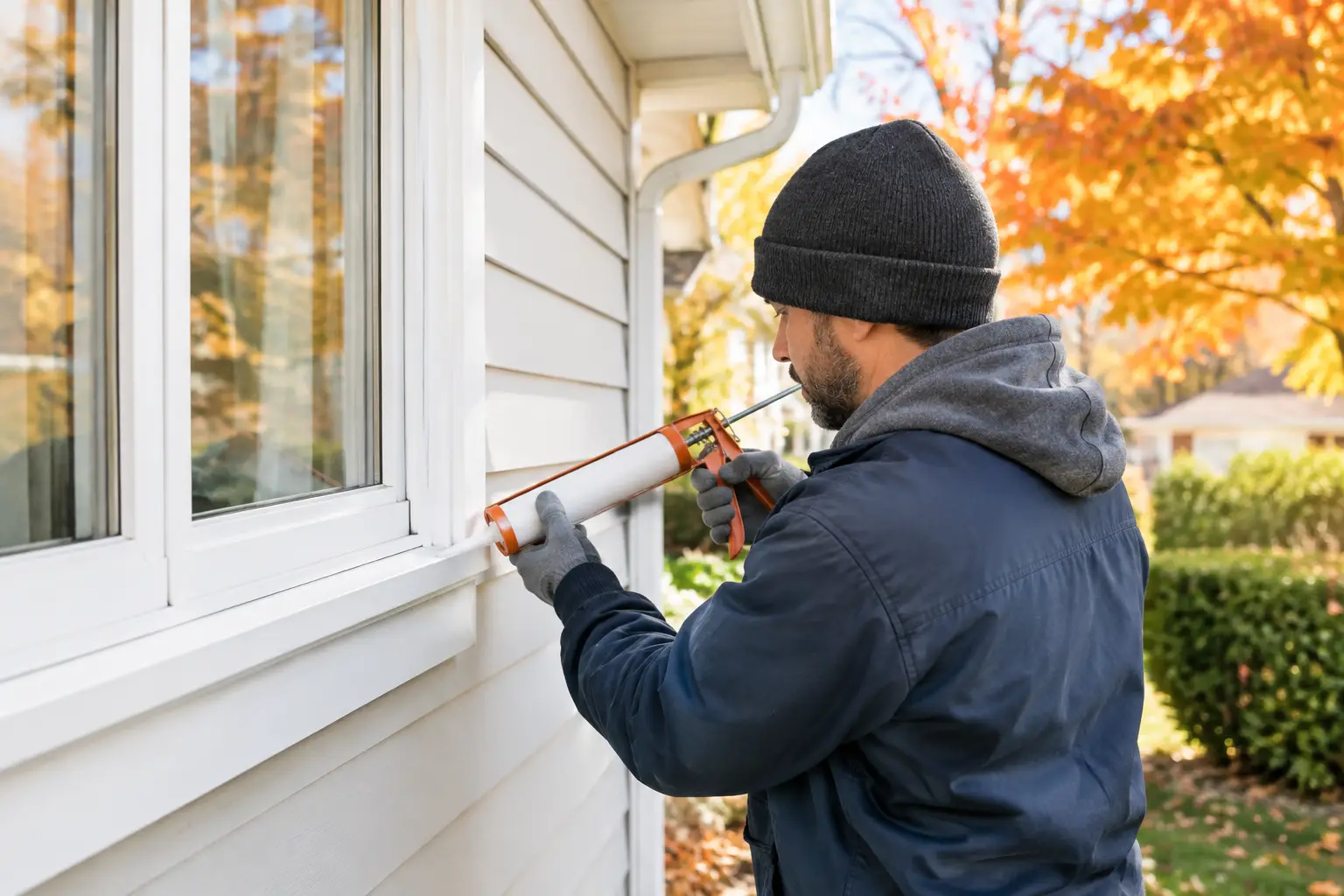
Windows and doors are common sources of air leaks and water intrusion. Weatherstripping becomes compressed over time, caulk separates from siding or trim, and door sweeps wear down from daily use. These are straightforward issues, but they can make rooms less comfortable and allow moisture to enter wall openings.
Check for visible gaps around exterior trim, cracked caulk, loose window frames, and daylight showing under exterior doors. On a windy day, you may also feel drafts around the edges of doors and windows. Replacing worn weatherstripping, installing a new door sweep, and recaulking exterior joints can make a noticeable difference in comfort and energy use.
Not every draft means a window replacement is necessary. If the window operates properly and the frame is in good condition, targeted sealing may be the practical choice. Replacement becomes more reasonable when there is rot, failed glass seals, repeated water entry, or significant damage to the frame.
Choose the Right Caulk for the Surface
Caulk is a small detail with a big role in weatherproofing. Exterior-grade sealant should stay flexible as materials expand and contract in changing temperatures. The joint also has to be clean, dry, and properly prepared for the sealant to adhere.
Caulk can close narrow gaps around window and door trim, siding transitions, and utility penetrations. It should not be used to cover active rot, major structural gaps, or areas that need a flashing repair. Sealing over the wrong problem can trap moisture and delay the repair that actually protects the home.
Protect Siding, Trim, and Exterior Wood
Paint is more than a cosmetic finish. On wood siding, fascia, trim, and porch components, a sound paint or stain system helps shed water and limit sun damage. Peeling paint, soft wood, open joints, and cracked trim give moisture a path behind the surface.
Walk around the exterior and look closely at lower trim boards, window sills, fascia, porch posts, and areas near gutters. These locations are often exposed to repeated rain or splashback. Soft spots, discoloration, or paint that bubbles soon after repainting may point to moisture behind the surface.
Weatherproofing exterior wood often requires more than applying another coat of paint. Damaged boards should be repaired or replaced, loose trim should be secured, and the area should be properly primed and sealed before painting. Addressing the underlying condition helps the new finish last longer and prevents decay from spreading.
Improve Attic Insulation and Ventilation
A hot, humid attic can affect comfort throughout the house. In summer, attic heat transfers downward and makes air conditioning work harder. In cooler weather, gaps around attic penetrations can allow warm interior air to escape, contributing to energy loss and sometimes condensation.
Start by checking insulation levels and looking for gaps around recessed lights, plumbing stacks, wiring openings, and attic hatches. Air sealing these openings before adding insulation is often more effective than simply adding more insulation over existing leaks. The attic hatch should also be insulated and weatherstripped if it opens directly into conditioned living space.
Ventilation matters, but it must be balanced. Soffit, ridge, gable, or powered vents need to work with the home’s overall design. More ventilation is not automatically better if it creates unintended air movement or allows wind-driven rain into the attic. A qualified professional can help identify whether the issue is insufficient insulation, air leakage, poor ventilation, or a roof leak.
Secure Plumbing and Utility Penetrations
Hose bibs, dryer vents, electrical service lines, HVAC lines, plumbing pipes, and cable connections all pass through exterior walls. Each opening needs a properly sealed exterior connection. When sealant fails, rainwater and insects can find their way behind siding or into wall cavities.
Pay close attention to the exterior dryer vent cover. It should open freely when the dryer runs, close when it is off, and remain intact enough to keep out rain and pests. HVAC line covers should also be secure, with openings around the line set sealed appropriately.
For homes with exposed plumbing in crawl spaces, garages, or exterior walls, protection from occasional freezing temperatures is worth planning before a cold snap. Pipe insulation can help in vulnerable locations, but it is not a substitute for repairing leaks, sealing major drafts, or protecting pipes that are improperly exposed.
Do Not Overlook the Crawl Space and Foundation
Moisture below the home can be as damaging as water above it. In the warm, humid conditions common across North Florida and Southeast Alabama, crawl spaces can develop excessive moisture that contributes to musty odors, wood decay, mold growth, and floor problems.
Look for standing water, damp soil, torn vapor barriers, wet insulation, sagging ductwork, or signs of pests. Exterior drainage problems often show up in the crawl space first. Redirecting roof runoff, correcting grading, repairing foundation vents or access doors, and installing or repairing a vapor barrier can help control moisture, depending on the construction of the home.
Foundation cracks should be evaluated based on their size, location, and behavior. Hairline surface cracks may be minor, while widening cracks, horizontal cracks, or cracks accompanied by water entry and movement need professional attention. Weatherproofing works best when it addresses the source of the water, not just the visible symptom inside.
Prioritize the Best Weatherproofing Home Improvements
If several areas need attention, begin with projects that prevent active water intrusion. Roof repairs, damaged flashing, failing gutters, leaking windows, and rotted exterior trim should take priority over cosmetic upgrades. Water damage spreads quickly and can make a small exterior repair into a larger interior project.
Next, focus on air sealing and insulation improvements that make the home more comfortable year-round. Door sweeps, weatherstripping, exterior caulking, attic air sealing, and insulation can often be completed without a major renovation. Finally, maintain painted surfaces, drainage systems, and exterior seals on a regular schedule so minor wear does not become a repair emergency.
Some weatherproofing work is well suited to routine maintenance, but roof access, hidden moisture, damaged trim, and drainage corrections can require skilled repair work. Sola Handyman Services helps homeowners throughout Tallahassee, Marianna, Dothan, and surrounding areas address practical exterior repairs and improvement projects with dependable workmanship.
A weatherproof home does not need to be perfect to perform well. It needs a dry roof, controlled drainage, sealed exterior openings, and regular attention to the places where water and air try to get in. Taking care of those areas now helps protect the comfort, value, and condition of your home through every season.