Refacing vs Replacing Cabinets: Choose Wisely
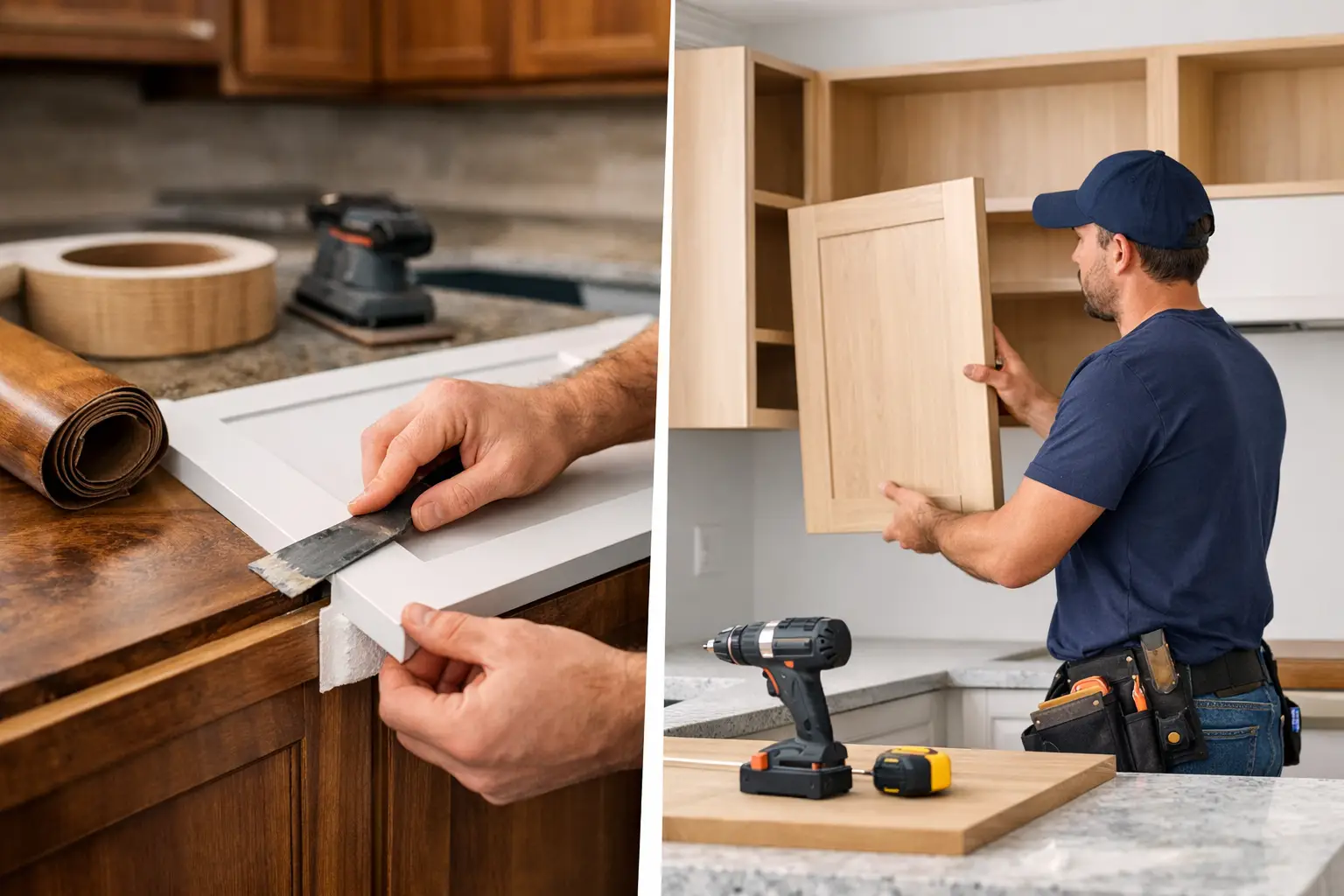
A kitchen can feel worn out long before it stops working. Faded doors, peeling finishes, dated hardware, and cramped storage are often what push homeowners to compare refacing vs replacing cabinets. Both can improve the room significantly, but they solve different problems. The right choice depends on what is behind the cabinet doors, how you use the kitchen, and whether your plans include changing the layout.
For homeowners in Tallahassee, Marianna, Dothan, and nearby communities, the best kitchen upgrade is not always the one with the biggest price tag. It is the one that addresses the actual condition and function of the space without creating avoidable work or expense.
What Cabinet Refacing Actually Changes
Cabinet refacing keeps the existing cabinet boxes in place. A remodeling professional replaces the visible doors and drawer fronts, then covers the cabinet frames with matching veneer or a new surface material. New hinges, pulls, knobs, and sometimes trim complete the update.
The result can make an older kitchen look dramatically different while preserving the original cabinet footprint. Homeowners can choose a cleaner door profile, a different color or wood finish, and updated hardware without tearing out every cabinet box.
Refacing works best when the existing cabinets are well-built, securely attached, and in good structural condition. Solid wood or quality plywood boxes often have years of service left in them. If the layout already works for your household, refacing can be a practical way to put more of the budget toward countertops, backsplash tile, lighting, or flooring.
When Refacing Is a Good Fit
Refacing is worth considering when cabinet doors are outdated but the boxes are square, sturdy, and free of major water damage. It is also a strong option when you want a cosmetic update without relocating plumbing, electrical connections, or appliances.
For example, a homeowner may be happy with the location of the sink, range, refrigerator, and pantry but dislike dark oak doors from the 1990s. New shaker-style doors, fresh finishes, and modern hardware can change the character of that kitchen without the disruption of a complete cabinet removal.
Refacing can also be less disruptive to daily life. Because the cabinet boxes remain in place, the project generally involves less demolition and fewer materials removed from the home. That does not mean it is a simple paint job. Proper refacing requires accurate measurements, clean surface preparation, properly fitted doors, and durable installation.
What Replacing Cabinets Involves
Replacing cabinets means removing the existing cabinet boxes and installing new ones. This approach gives you much more freedom to change the kitchen's storage, configuration, and overall function.
New cabinets can be selected in stock, semi-custom, or custom options. The choice affects the budget, lead time, finish choices, interior accessories, and how precisely the cabinets fit the room. Replacement may also require countertop removal, wall repair, flooring adjustments, plumbing work, electrical changes, and appliance coordination.
That added scope is why cabinet replacement costs more than refacing in many cases. Still, replacement may be the smarter long-term investment when the current cabinets have structural problems or no longer support the way your family uses the kitchen.
When Replacement Is the Better Investment
Replace cabinets when the boxes are swollen from water exposure, sagging, broken, poorly constructed, or difficult to repair. Particleboard cabinets that have deteriorated around the sink area, for instance, may not provide a sound base for refacing.
Replacement also makes sense when the layout is the real problem. If there is not enough prep space, the drawers are too shallow, corner cabinets waste space, or the kitchen feels closed off from the rest of the home, new cabinetry allows a more functional plan.
A replacement project can add features that are hard or impossible to achieve by keeping old boxes. These may include deep drawer bases for pots and pans, pull-out trash storage, roll-out shelves, a pantry cabinet, appliance garages, or cabinets sized around new appliances. If accessibility is a concern, replacement can also create better reach ranges and more usable storage.
Refacing vs Replacing Cabinets: The Main Decision Points
The decision should start with cabinet condition, not simply appearance. Open the doors and inspect the boxes. Look under the sink, at the cabinet bottoms, and along the back corners. Check whether shelves are sagging, hinges are pulling loose, or the frames have separated from the wall.
If the boxes are sound, refacing may deliver the appearance you want at a lower project cost. If damage is widespread, replacement prevents you from putting new doors and finishes on cabinets that may fail sooner than expected.
Layout is the next major factor. Refacing keeps the existing footprint. You may be able to make modest adjustments, such as adding trim or replacing a small section, but you generally cannot create a new island, move a sink wall, or improve an inefficient work triangle through refacing alone.
Budget matters, but it should be viewed as total project value rather than the cabinet line item alone. Refacing can leave room in the budget for other visible improvements. Replacement can cost more upfront but may be worthwhile when it prevents repeated repairs and makes the kitchen easier to use every day.
Timing and disruption also deserve attention. A refacing project is often faster because fewer components are removed. Full replacement may take longer, particularly if cabinets are ordered, walls need repair, or other trades are involved. Homeowners should plan for limited kitchen access during either project, especially when countertops are being replaced at the same time.
Cost Factors Beyond the Cabinets
There is no single price that applies to every kitchen. Cabinet size, material selection, door style, hardware, labor, and local project conditions all affect the final number.
With refacing, costs commonly rise when a kitchen has many doors and drawers, detailed trim, specialty finishes, or cabinet boxes that need repair before new materials can be installed. New hardware, crown molding, light rail, and soft-close hardware can also add to the project while improving the finished result.
With replacement, the cabinet cost is only part of the equation. Countertops often need to be removed and reinstalled or replaced. Plumbing lines may need adjustment if the sink moves. Electrical outlets, under-cabinet lighting, flooring, drywall, paint, and backsplash work can all become part of the scope.
A clear site assessment helps avoid surprises. Before choosing either option, measure the room, discuss how you use the kitchen, and identify items that need to stay or change. A dependable remodeling professional should explain what the work includes and flag related repairs before the project begins.
Do Not Overlook the Middle Ground
Some kitchens do not require an all-or-nothing decision. You may be able to replace a damaged sink base cabinet while refacing the remaining sound cabinets. Another homeowner may keep existing upper cabinets, install new lower cabinets for better drawer storage, and coordinate the finishes for a cohesive look.
Painting cabinets is another option, though it is different from refacing. Paint can refresh structurally sound cabinets at a lower cost, but it will not change door style, correct damaged boxes, or add storage function. The right preparation and finish are essential for a surface that holds up in a busy kitchen.
Small upgrades can also make a noticeable difference alongside either approach. Better lighting, a new faucet, updated pulls, soft-close hinges, and organized drawer inserts can improve daily use without expanding the entire project.
How to Choose for Your Home
Start by asking two direct questions: Are the cabinet boxes worth keeping, and does the current kitchen layout work for us? If the answer to both is yes, refacing is often a sensible path. If either answer is no, replacement deserves a closer look.
It also helps to consider how long you plan to remain in the home. A quick visual update may be appropriate before selling, provided the cabinets are in good shape. For a long-term home, investing in storage, durability, and a layout that fits your household may offer more lasting value.
Sola Handyman Services can help homeowners evaluate cabinet condition and plan practical kitchen improvements based on the work the space truly needs. A well-chosen cabinet project should leave you with more than a better-looking kitchen - it should make everyday cooking, cleaning, and gathering at home easier.