Repair or Replace Deck Boards? Know the Signs
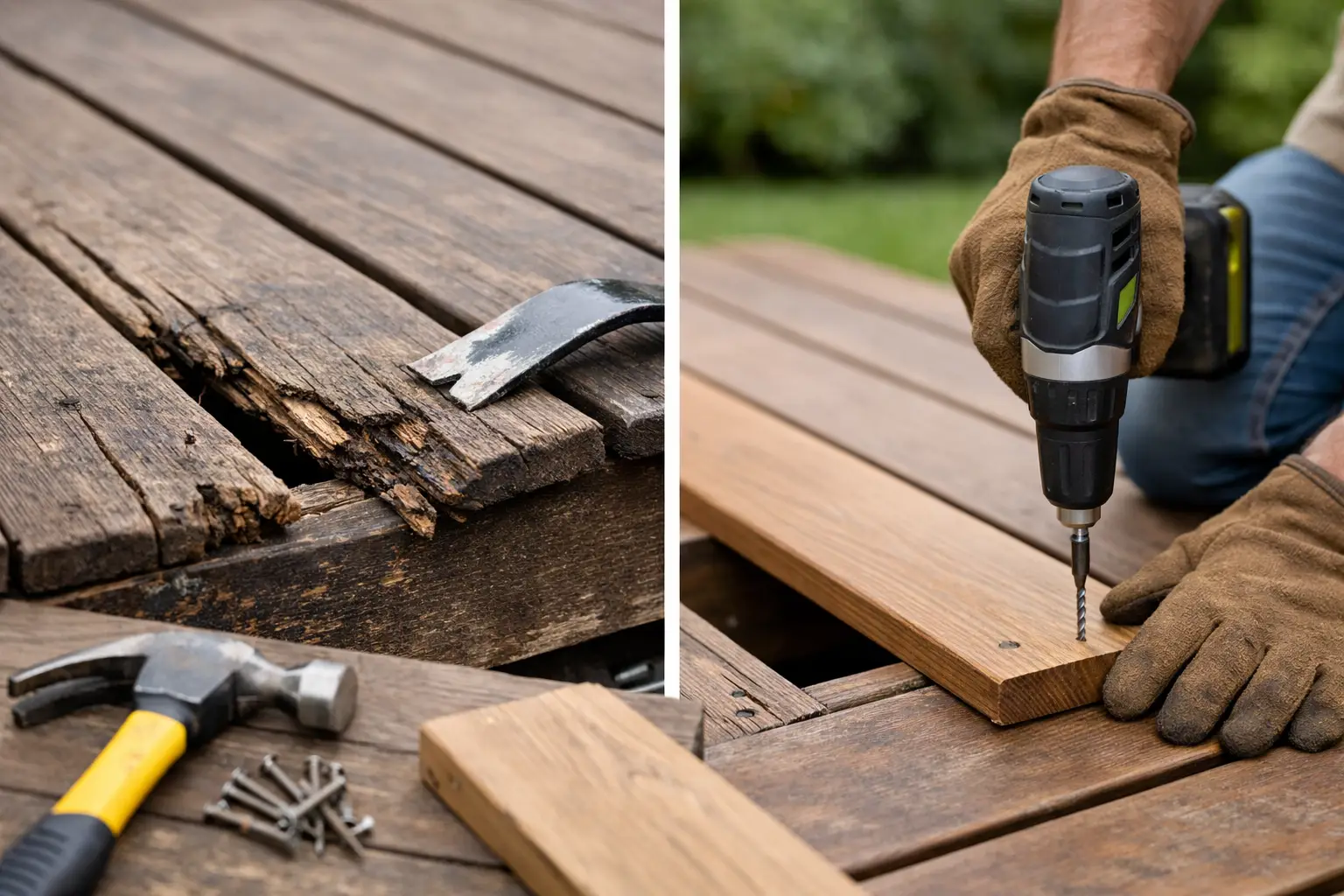
A deck can look fine from the yard and still have boards that are becoming unsafe underfoot. When you need to decide whether to repair or replace deck boards, the right answer depends on more than a few surface cracks. The condition of the wood, the extent of moisture damage, and the state of the framing underneath all matter.
For homeowners in Tallahassee, Marianna, Dothan, and nearby communities, heat, humidity, heavy rain, and strong sun can all shorten the life of an exterior deck. Addressing a few damaged boards early is usually a straightforward repair. Waiting until rot spreads or fasteners fail can turn a smaller project into a larger deck rebuild.
When Deck Board Repair Makes Sense
Repair is often the practical choice when damage is limited to a few boards and the deck structure remains solid. A qualified handyman can remove individual problem boards, inspect the joists beneath them, and install new boards that fit the deck correctly.
Small splits, minor surface checking, and faded stain do not automatically mean a board needs replacement. Wood naturally expands and contracts outdoors, especially through changing weather. If the board is still firm, not deeply cracked, and securely fastened, sanding, sealing, or refinishing may extend its useful life.
A localized repair can also make sense when one area gets more wear than the rest of the deck. Boards near stairs, grills, gates, or outdoor furniture often deteriorate faster because they see more foot traffic and hold more moisture. Replacing those individual boards can improve safety and appearance without disturbing the entire surface.
The key question is whether the damage is truly isolated. If several boards show the same symptoms across the deck, spot repairs may only delay a broader replacement project.
Signs You Should Replace Deck Boards
Deck boards should be replaced when they have lost their strength, not just their appearance. A gray finish or worn stain can be cosmetic. Soft wood, deep rot, and loose boards are structural concerns that should not be ignored.
Pay close attention to boards that feel spongy when walked on, flex more than surrounding boards, or have areas that crumble when pressed with a screwdriver. Those are common signs of decay below the surface. Wood rot often starts where rainwater collects, such as around fasteners, between boards with poor spacing, or in shaded areas that do not dry quickly.
Replacement is usually the safer choice when you notice four or more of these conditions:
- Boards with soft spots, crumbling edges, or visible rot
- Deep cracks that create splinters or weaken the board
- Warped boards that lift, cup, or create trip hazards
- Loose fasteners, popped nails, or screws that no longer hold
- Repeated damage across several sections of the deck
In some cases, boards can be removed and replaced while the deck framing stays in place. However, deteriorated decking can hide damaged joists, beams, or posts. A surface-board replacement should always include an inspection of what is underneath before new material is installed.
Repair or Replace Deck Boards: Check the Framing First
The deck boards are only the walking surface. The framing is what carries the weight of people, furniture, planters, and outdoor gatherings. If the joists below are sound, level, and free from serious decay, replacing worn surface boards may provide many more years of use.
Problems with the framing change the scope of the job. Sagging sections, loose ledger connections, rusted hardware, insect damage, or rotted joists may require repairs beyond the deck boards themselves. Covering those issues with new boards may improve the appearance temporarily, but it does not make the deck safe.
This is especially relevant for older wood decks exposed to years of Florida and Alabama weather. Humidity can keep shaded lumber damp for long periods, while summer sun dries and cracks exposed areas. That cycle can weaken boards and framing at different rates.
A professional inspection helps identify whether your deck needs a simple board replacement, targeted structural repair, or a more complete restoration. It also helps prevent wasted money on new decking installed over compromised supports.
Matching New Boards to an Existing Deck
When only a few boards need replacement, matching the existing deck can be challenging. Older treated lumber may have faded significantly, and even the same species of wood can vary in grain and color. New boards may initially stand out, especially after installation.
That difference often becomes less noticeable after weathering and refinishing. If the deck is otherwise in good shape, replacing damaged boards and applying a consistent stain or sealer across the surface can create a more uniform result.
Material choice matters as well. Pressure-treated lumber is a common option for practical repairs, while cedar and other wood species offer a different appearance and maintenance profile. Composite boards can reduce ongoing maintenance, but they may not match a wood deck in thickness, color, or fastening method. They also do not solve framing problems below.
For partial replacements, the best material is usually one that fits the existing joist spacing, board dimensions, and overall deck design. A proper fit is more important than choosing a board that simply looks close from a distance.
Consider Cost, Safety, and Remaining Deck Life
Homeowners often start with cost, and that is reasonable. Replacing two or three boards costs less than resurfacing an entire deck. But the lowest immediate price is not always the best value if surrounding boards are close to failure.
Consider how much useful life remains in the rest of the deck. If most boards are solid and properly maintained, targeted repairs are usually worthwhile. If repairs have become a regular chore, widespread replacement may be more cost-effective over the next few years.
Safety should carry the most weight in the decision. A deck used for family gatherings, children, pets, or regular outdoor entertaining needs a stable, splinter-free walking surface. Raised decks deserve extra attention because a failed board or weakened railing can create a serious hazard.
It also helps to think about upcoming plans for the home. If you are preparing to sell, a clean and safe deck can improve curb appeal. If you plan to stay for years, investing in durable materials and needed structural repairs can make the space more enjoyable and easier to maintain.
Keep Repaired or Replaced Boards in Good Condition
Once the damaged boards have been addressed, routine care can slow future deterioration. Sweep leaves and debris from the deck so moisture is not trapped against the wood. Keep gaps between boards clear enough for water to drain, and trim nearby plants that block airflow or keep the deck shaded and damp.
Wood decks also benefit from periodic cleaning and a quality water-repellent sealer or stain. The right schedule depends on sun exposure, the type of finish, and local weather, but waiting until boards are badly cracked or dry is usually too late. Check fasteners, railings, stairs, and the areas around posts at least once each year.
If you see soft spots, loose boards, or signs that rot may be spreading, address them before the next season of heavy rain. Sola Handyman Services can help homeowners evaluate worn deck boards, make practical repairs, and determine when a larger replacement is the safer choice. A well-maintained deck should feel like a reliable part of your home, not something you have to watch every time someone steps outside.